
Learn more
About Nowruz
A celebration of renewal, unity and cultural heritage.

Nowruz (also spelled Norooz, Nawruz, or Navruz) is the Persian New Year, celebrated on or around 20 to 21 March, marking the spring equinox, the moment when day and night are equal in length. Literally meaning ‘new day’ in Persian, Nowruz is both an ancient and living festival that has been celebrated for over 3,000 years across a vast region stretching from Iran and Central Asia to the Caucasus, the Middle East, and parts of South Asia and the Balkans.
Nowruz symbolises rebirth, renewal, and the triumph of light over darkness. Over time, it has evolved to reflect the rich cultural diversity of the countries that celebrate it.
Iran
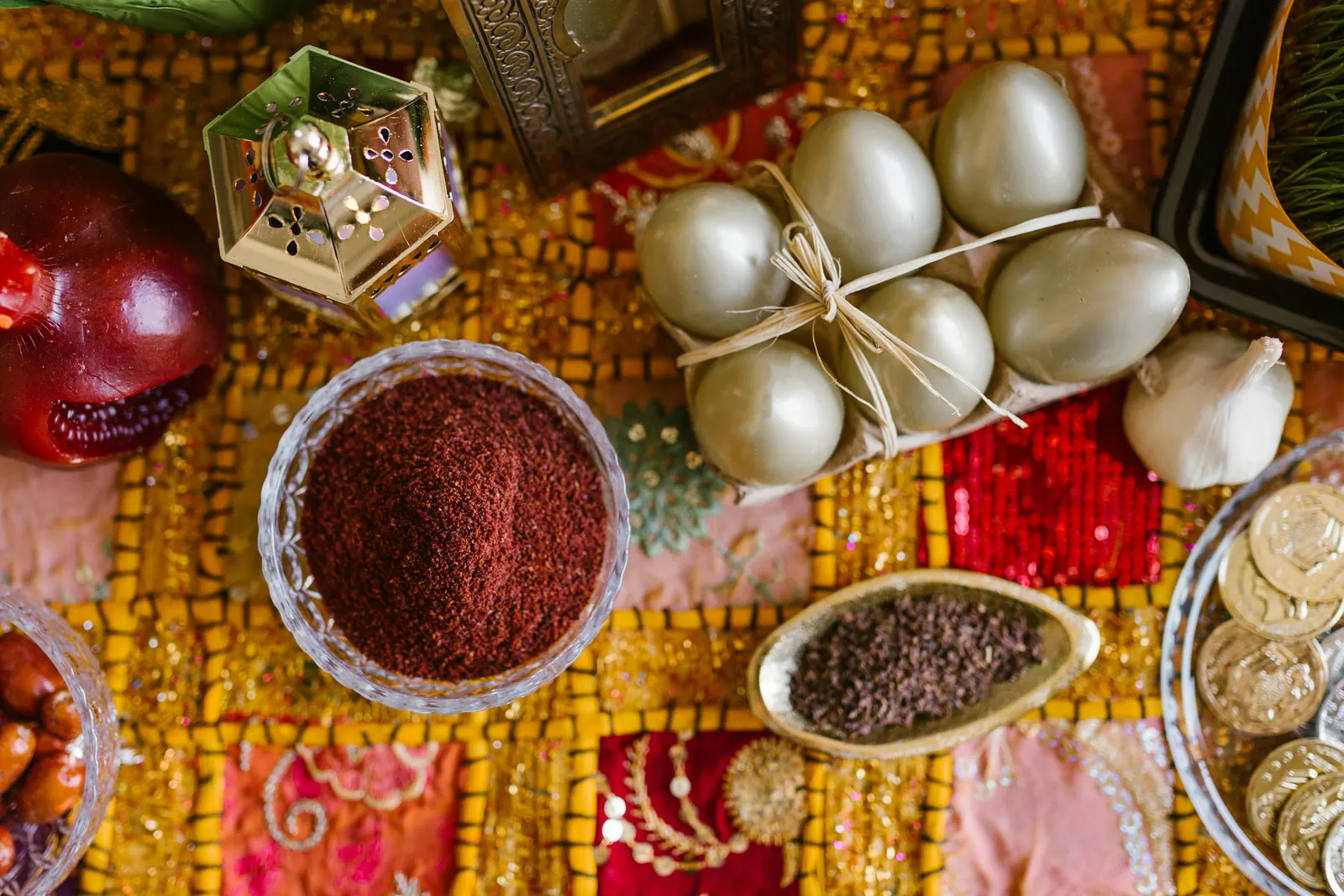
The Haft-Seen table
Families set up a table with seven symbolic items beginning with the Persian letter S.
Around the world
How it is celebrated
Iran
As the birthplace of Nowruz, Iran celebrates it as the most important holiday of the year. Preparations begin weeks before with khaneh-tekani (spring cleaning) and lead to 13 days of festivities.
Traditions. Families set up a Haft-Seen table with seven symbolic items beginning with the Persian letter S. A mirror, candles, painted eggs, goldfish, and poetry from Hafez or Ferdowsi often accompany the display.
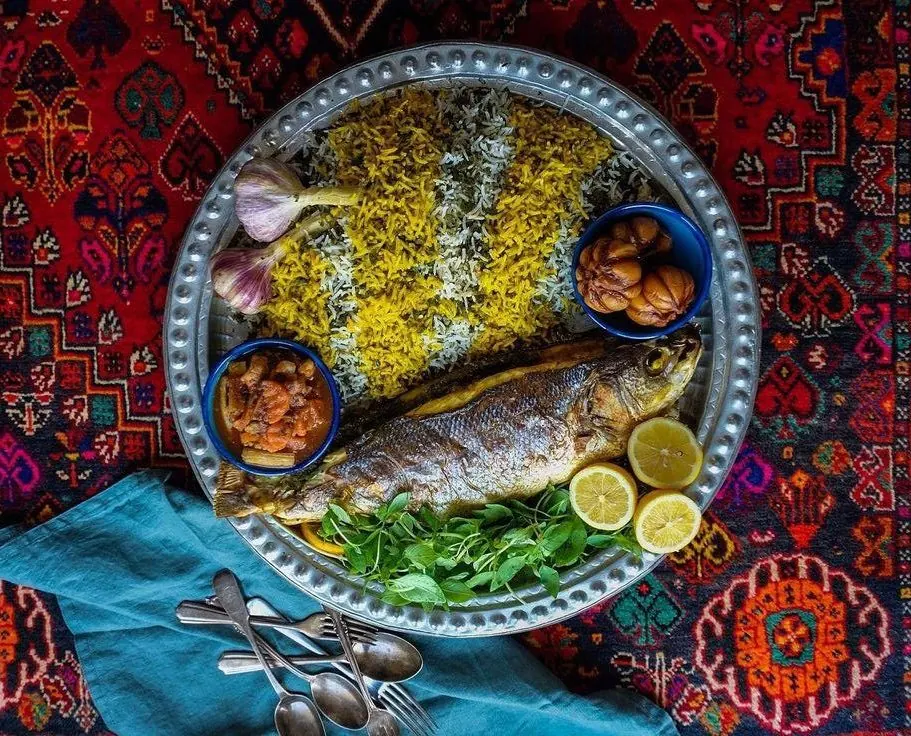
Food. Sabzi Polo ba Mahi, herbed rice with fish, is the traditional New Year's meal.
Arts and music. Recitations of Hafez are common; classical Persian music, with instruments like the setar and santur, fills gatherings; and miniature paintings often depict springtime or mythological Nowruz scenes.

Afghanistan
Known as Nawroz, the celebration in Afghanistan blends Persian traditions with local customs.
Traditions. In Mazar-i-Sharif, the raising of the Janda, a sacred banner, marks the start of festivities. People wear new clothes, visit family, and hold public games like buzkashi, a horseback sport.
Food. Haft Mewa, a compote of seven dried fruits and nuts, is served, representing abundance and unity.
Arts. Folk music with the rubab and tabla accompanies poetic readings, often inspired by Rumi and Khoshal Khan Khattak.

Azerbaijan
In Azerbaijan, Nowruz (Novruz to locals) is one of the most cherished national holidays. It celebrates the arrival of spring and symbolises renewal and balance, uniting families, neighbours and entire communities in celebration of light, hope and new beginnings.
Preparation starts four weeks before, through Charshanba, a sequence of four Tuesdays: Water Tuesday (purification and clarity), Fire Tuesday (warmth, energy, transformation), Wind Tuesday (movement and change) and Earth Tuesday (rebirth and fertility), the last before the holiday.
Symbols. The most recognisable symbol is the khoncha, a decorated tray of sprouted wheat (samani), candles, sweets, nuts, pakhlava, shekerbura and painted eggs. Jumping over fire is a symbolic act of cleansing and renewal, leaving difficulties in the past.
Characters. Popular figures are Kosa, representing winter's hardship, Kechal, the bald-headed figure of spring and vitality, and Bahar Gizi, the Spring Girl.

Kurdistan
For Kurds across Iraq, Iran, Turkey and Syria, Nowruz (Newroz) also carries a sense of freedom and resistance, tied to the legend of Kawa the Blacksmith, who defeated a tyrant and brought light back to the world.
Traditions. Families gather outdoors, light bonfires, and dance in colourful traditional clothing.
Music and poetry. Songs of freedom and renewal are sung to the rhythm of the daf and zurna, and poetry by Kurdish poets like Ahmad Khani celebrates identity and hope.

Pakistan
In Pakistan, Nowruz is observed mainly by Parsi (Zoroastrian) and Ismaili Muslim communities.
Traditions. Homes are cleaned and decorated with flowers, and special prayers of gratitude are offered.
Food. Dishes such as seviyan (sweet vermicelli) and pilaf are common.
Arts. Traditional calligraphy and music enrich the celebration, alongside readings of Persian poetry.